
NDT Testing for Buildings
Non-destructive concrete and structural testing to evaluate building strength and stability without causing damage.
What Is NDT for Buildings
Non-Destructive Testing (NDT) for buildings evaluates the in-situ quality, compressive strength, and corrosion state of structural concrete elements (columns, beams, slabs) without causing physical damage. Unlike metal NDT, building NDT focuses on civil materials, concrete integrity, and reinforcement layout.
Standards & Test Parameters
| Test Method | Standard Reference | Core Focus & Capabilities |
|---|---|---|
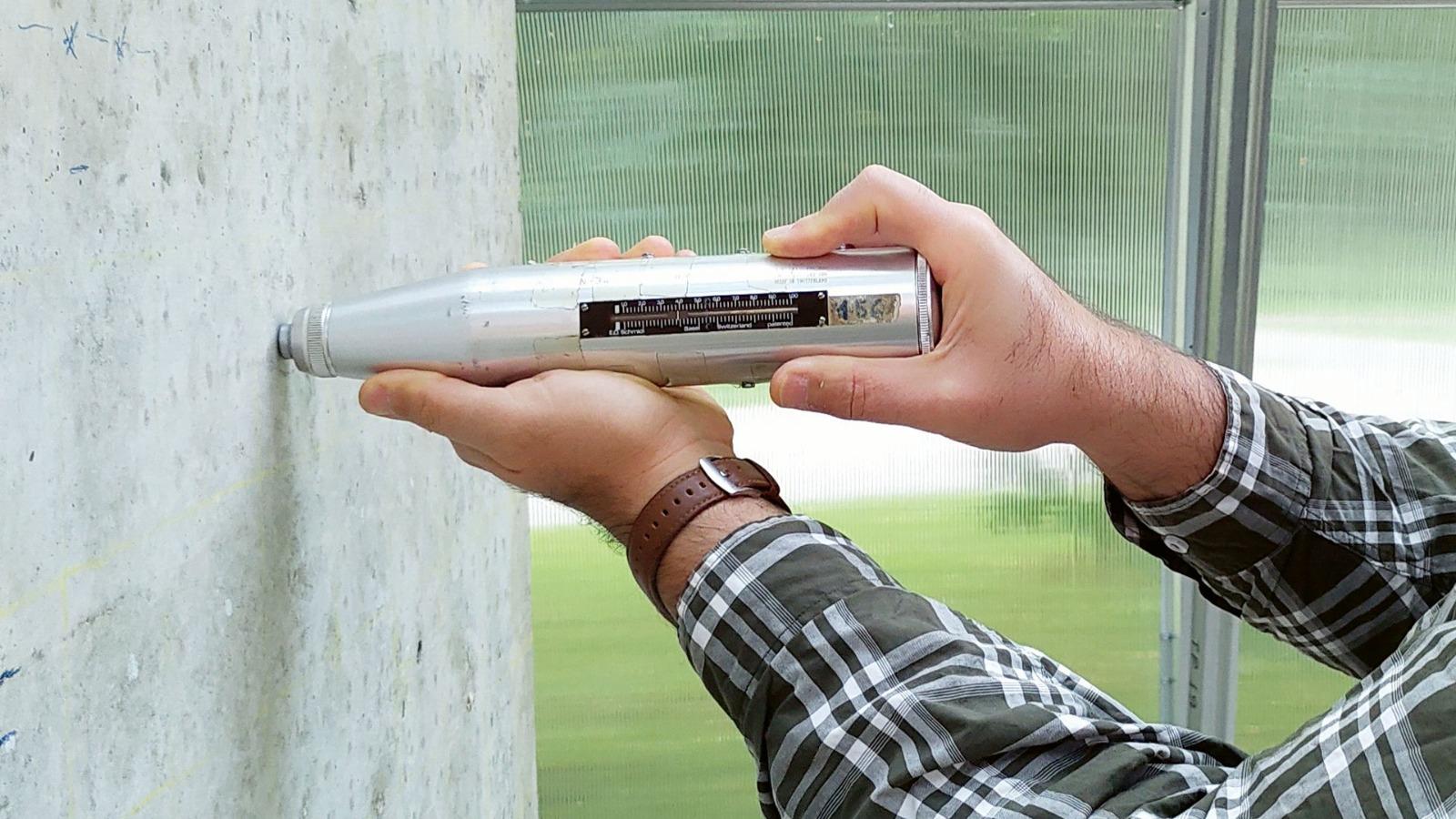
| Rebound Hammer Test | IS 13311 Part 2 / ASTM C805 | Surface hardness assessment & comparative strength evaluation |
| Ultrasonic Pulse Velocity (UPV) | IS 13311 Part 1 / ASTM C597 | Concrete quality grading, detecting voids, cracks, laminations |
| Rebar Mapping & Cover Meter | BS 1881 Part 204 / DGZfP B2 | Location, spacing, and concrete cover depth of rebars |
| Carbonation Depth Test | IS 516 Part 5 / RILEM CPC-18 | Evaluation of carbonation depth and steel corrosion risk |
Concrete Assessment Objectives
- Determine actual concrete compressive strength in existing columns and beams.
- Detect internal honeycombing, voiding, or structural micro-cracks.
- Inspect rebar spacing and reinforcement configuration for load capacity calculations.
- Establish safety and feasibility for building extensions, modifications, or redevelopment.
Frequently Asked Questions
Can concrete NDT be done on occupied buildings?
Yes, NDT methods are non-invasive and cause minimal disruption, noise, or dust, making them ideal for occupied residential, commercial, or public buildings.
Which test is more accurate: Rebound Hammer or UPV?
Rebound Hammer measures surface hardness, while UPV scans the internal volume. For structural audits, combining both methods (called the SonReb method) provides the most reliable evaluation of concrete strength.