
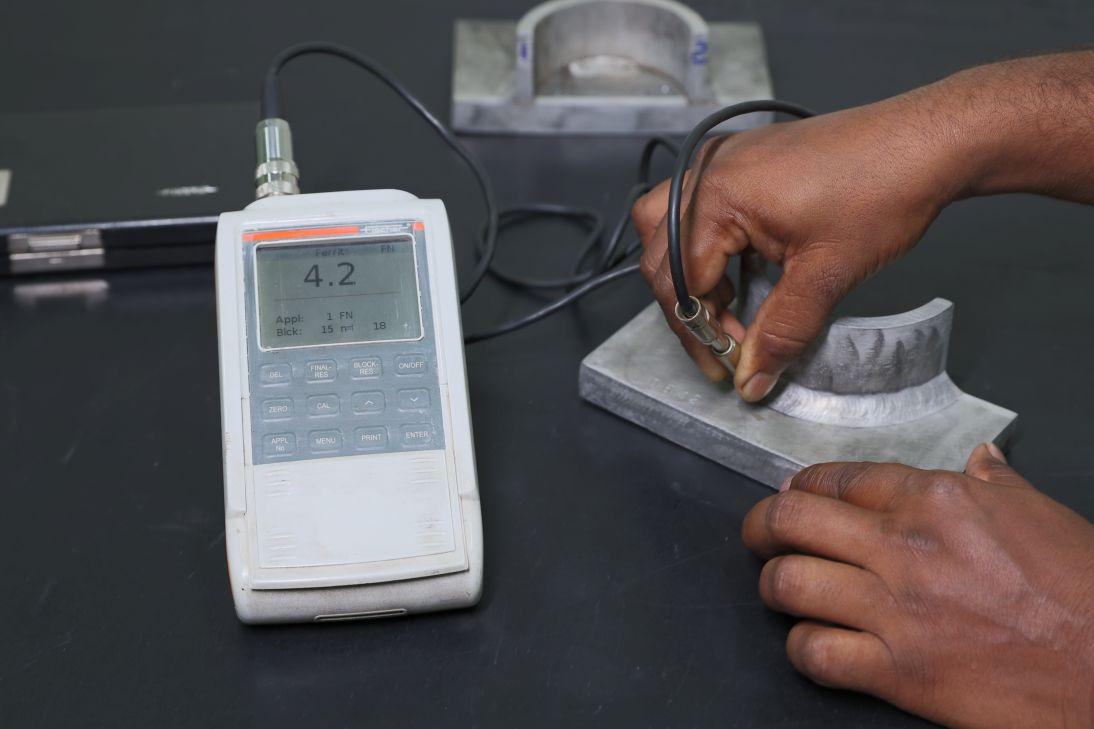
NDT for Metals
Non-destructive testing (ultrasonic, radiography, magnetic particle, dye penetrant) to inspect components without damage.
What Is NDT
Non-Destructive Testing (NDT) is a group of analysis techniques used to evaluate the properties of a material, component, or system without causing damage. It is critical for weld inspections, quality audits of structural steel, and finding internal and surface defects in raw or finished metals.
Standards & Test Parameters
| Test Type | Standard | Metals Covered |
|---|---|---|
| Ultrasonic Testing (UT) | ASTM A388 / ASME Sec V Art 4 | Plates, forgings, structural welds |
| Radiography Testing (RT) | ASTM E94 / ASME Sec V Art 2 | Castings, weld joints, pressure vessels |
| Magnetic Particle Testing (MPT) | ASTM E709 / ASME Sec V Art 7 | Ferromagnetic steels and irons |
| Liquid Penetrant Testing (LPT) | ASTM E165 / ASME Sec V Art 6 | All non-porous metals (steel, aluminum, copper) |
Frequently Asked Questions
Can NDT be performed on-site?
Yes. Ultrasonic, magnetic particle, and liquid penetrant testing are routinely performed on-site at fabrication shops, construction projects, and client facilities. Radiography is typically performed in our dedicated lead-shielded exposure rooms for radiation safety.
Are your NDT technicians certified?
Yes, all our NDT inspectors are certified to ASNT Level II (American Society for Non-Destructive Testing) standards with extensive practical experience.